
Yes, ancient Greece profoundly shaped modern Western democracy in numerous, foundational ways. We’re talking about the blueprints for how we think about self-governance, citizen participation, and even the very words we use to describe it. From direct participation to the idea of a constitution, their experiments and philosophies laid critical groundwork that influences our democratic systems today.
The Birth of the Idea: Dēmokratia Itself
Let’s start with the most obvious: the word “democracy.” It’s Greek. “Dēmokratia” literally translates to “rule by the people.” Before Athens, there were monarchies, oligarchies, and tyrannies, but nothing quite like a system where a substantial portion of the citizenry had a direct say in governance. While not a perfect system by modern standards (excluding women, slaves, and foreigners), the Athenian model of direct democracy was a groundbreaking experiment that planted the seed for popular sovereignty.
Origins of “Rule by the People”
The concept wasn’t born overnight. It evolved through centuries of political struggle, from the early Athenian kings to the reforms of Solon, Cleisthenes, and Ephialtes. Solon’s reforms in the 6th century BCE aimed to alleviate economic hardship and broaden political participation, laying some early groundwork. Cleisthenes, often called the “father of Athenian democracy” in 508/507 BCE, drastically reorganized the citizenry into ten tribes (phylai), breaking traditional aristocratic power bases and ensuring a more equitable distribution of citizens across political units. This restructuring was crucial because it ensured that political identity was based on residence rather than kinship, making it harder for powerful families to dominate. Ephialtes, in the mid-5th century BCE, further limited the power of the aristocratic Council of the Areopagus, transferring many of its judicial and political functions to the popular assembly and citizen juries. These incremental changes moved Athens towards a system where the “demos,” or the common people, held significant sway.
Athenian Direct Democracy vs. Modern Representative Systems
It’s important to differentiate. Athenian democracy was direct. Citizens gathered in the Ekklesia (assembly) on a regular basis – sometimes as often as 40 times a year – to debate and vote on laws, declare war, and elect officials. Every eligible male citizen had the right to speak and vote. This is a far cry from our modern representative democracies, where we elect individuals to make decisions on our behalf. While impractical for large, modern nation-states, the Athenian model’s commitment to direct citizen involvement profoundly influenced later thinkers who championed popular participation, even if the mechanism changed. The idea that citizens should have a say, rather than just be ruled, originates here.
Ancient Greece is often hailed as the cradle of Western democracy, where the principles of civic participation and political equality first took root. A fascinating article that delves deeper into this topic is available at this link, which explores how the democratic practices of ancient Athens laid the groundwork for modern democratic systems. The article examines key elements such as the assembly, the role of citizens, and the concept of voting, providing valuable insights into how these ancient practices continue to influence contemporary governance.
The Principle of Equality Before the Law: Isonomia
Another monumental contribution was the concept of “isonomia” – equality before the law. In ancient Greece, particularly Athens, this meant that all eligible citizens, regardless of their wealth or social standing, had the same rights and obligations under the law. This wasn’t always perfectly implemented, of course, but the ideal itself was revolutionary. Before this, legal systems were often heavily biased towards the aristocracy or ruling elites.
Breaking Down Class Barriers in Justice
Historically, legal systems were often tools of the powerful, with different rules for different social classes. The Athenian ideal of isonomia aimed to dismantle this. While it didn’t eliminate all forms of social hierarchy, it established a foundational principle: that the law should apply equally to all citizens. This meant that a rich aristocrat could, in theory, face the same legal consequences as a poorer farmer if they committed the same offense. This was a critical step towards a more just and predictable legal system, moving away from arbitrary rule.
Influence on Constitutionalism
The concept of isonomia also tied into the broader idea of a “rule of law,” where laws, not individuals, held ultimate authority. This is a cornerstone of modern constitutional democracies. Constitutions, by their nature, aim to establish a framework of laws that everyone, including those in power, must abide by, ensuring a level playing field. The Greek emphasis on established laws and processes over the whims of rulers laid the philosophical groundwork for constitutionalism, where power is limited by legal frameworks designed to protect citizens.
Citizen Participation and Civic Duty
The ancient Greeks, especially the Athenians, placed immense value on citizen participation and civic duty. Being a citizen wasn’t just about having rights; it also came with significant responsibilities. Active involvement in the political life of the polis (city-state) was considered essential for the well-being of the community and a hallmark of a virtuous life. This emphasis on active citizenship stands in stark contrast to many earlier societies where the masses were largely passive subjects.
The Assembly, Council, and Juries
Athenian citizens actively participated in various governing bodies:
- The Ekklesia (Assembly): As mentioned, this was the primary legislative body where all eligible male citizens could attend, debate, and vote on laws, decrees, and foreign policy. This required a significant commitment of time and effort from citizens.
- The Boule (Council of 500): This council prepared the agenda for the Ekklesia and oversaw the day-to-day administration of the city. Its members were chosen by lot from the ten tribes, and each served for one year, with no one allowed to serve more than twice. This random selection (sortition) was intended to prevent corruption and ensure a broad representation of citizens in governance.
- The Dikasteria (Juries): Athenian legal trials were conducted by large juries, often numbering hundreds or even thousands of citizens, also chosen by lot. These juries were both judge and jury, hearing cases and delivering verdicts. This widespread participation in the judicial system ensured that justice was administered by the people, not by a professional class of judges, further reinforcing the idea of direct citizen involvement in all aspects of governance.
The Concept of Eudaimonia and Political Life
For many Greek thinkers, particularly Aristotle, active political participation was seen as integral to achieving eudaimonia – a flourishing, well-lived life. They believed that humans were fundamentally “political animals” (zoon politikon) and that living outside the polis and participating in its affairs was to live an incomplete life. This deep philosophical connection between individual well-being and civic engagement instilled a strong sense of duty among citizens to contribute to their community. While modern society doesn’t always equate happiness directly with political involvement, the underlying principle that a healthy society requires active, engaged citizens remains a core tenet of democratic thought.
The Power of Reason and Debate
Ancient Greek society, particularly in Athens, fostered a culture of open debate, critical thinking, and logical argumentation. The public agora (marketplace) and the assembly were arenas not just for voting, but for vigorous discussion and persuasion. This emphasis on rhetoric and rational discourse is a cornerstone of any functional democracy, where ideas are tested and decisions are reached through reasoned deliberation rather than force or unquestioning obedience.
The Role of Rhetoric and Philosophy
Sophists and philosophers like Socrates, Plato, and Aristotle taught the art of rhetoric and critical inquiry. While the Sophists were sometimes criticized for teaching persuasive techniques without regard for truth, their emphasis on argumentation skills was undeniable. Philosophers, on the other hand, sought truth through rigorous logical reasoning and dialectic (dialogue). These intellectual traditions trained citizens to articulate their views, challenge others’ arguments, and analyze policies. The idea that good governance arises from careful consideration of arguments, rather than divine decree or brute power, is a powerful legacy. Our parliamentary debates, political speeches, and even op-eds in newspapers all trace their lineage back to this Greek emphasis on reasoned discourse.
Free Speech and the Marketplace of Ideas
While not as broad as modern conceptions of free speech, the Athenian principle of parrhesia (frank speech) allowed citizens to speak freely in the assembly, even if their opinions were unpopular. This freedom to express dissenting views and challenge authority figures was vital for the democratic process. It fostered a “marketplace of ideas” where different perspectives could be aired, debated, and ultimately, inform public policy. This foundational belief that open discussion and the free exchange of ideas are necessary for good governance is fundamental to modern liberal democracies.
The foundations of Western democracy can be traced back to ancient Greece, where the concept of citizen participation in governance first took root. This early form of democracy, particularly in Athens, emphasized the importance of civic engagement and public discourse, principles that continue to resonate in modern political systems. For a deeper understanding of how these ideals have evolved and their relevance today, you can explore this insightful article on freedom and civic responsibility found here.
Foundational Philosophical Concepts
| Aspect | Ancient Greece | Western Democracy |
|---|---|---|
| Time Period | 5th century BCE (Classical Athens) | 17th century CE to present |
| Political System | Direct democracy (citizens vote directly) | Representative democracy (elected officials vote) |
| Eligible Voters | Free male citizens, excluding women, slaves, and foreigners | All adult citizens regardless of gender or property ownership |
| Key Institutions |
|
|
| Citizen Participation | Direct involvement in lawmaking and judicial decisions | Voting for representatives and referenda |
| Philosophical Foundations | Ideas from philosophers like Socrates, Plato, Aristotle | Enlightenment principles: liberty, equality, popular sovereignty |
| Limitations | Excluded large portions of population; limited to city-state | Challenges with representation, political polarization |
Beyond specific governmental structures, ancient Greek philosophy provided profound intellectual underpinnings for democratic thought. Thinkers grappled with fundamental questions about justice, liberty, the ideal state, and the rights and responsibilities of individuals and rulers. Their conclusions, even when critical of democracy, forced subsequent generations to refine and defend democratic principles.
Justice and the Ideal State (Plato and Aristotle)
Plato, famously, was highly critical of Athenian democracy, which he believed led to mob rule and the execution of his mentor, Socrates. In his Republic, he proposed an ideal state ruled by philosopher-kings, arguing for a meritocracy rather than a democracy. However, even his critiques spurred later democratic thinkers to address the weaknesses he identified, such as the potential for demagoguery and the uneducated masses to make poor decisions.
Aristotle, Plato’s student, took a more empirical approach. In Politics, he analyzed various constitutions and forms of government, including democracy, oligarchy, and monarchy. While he saw democracy (or what he called “polity,” a mixed constitution) as potentially good when well-managed, he also warned of its potential degeneration into “ochlocracy” (mob rule). His systematic analysis of governmental structures, their strengths, and weaknesses, provided a framework for political science that continues to influence our understanding of statecraft. His emphasis on the “rule of law” and the importance of a strong middle class for political stability are particularly relevant.
Natural Law and Human Rights (Stoics)
While not directly tied to Athenian democracy, the later Stoic philosophers made significant contributions to ideas that would eventually underpin human rights and universal justice, concepts crucial for modern democracy. Stoics believed in a universal “natural law” that applied to all humanity, transcending local customs and political boundaries. This idea suggested that there are inherent moral principles discoverable through reason, and that all human beings, by virtue of their shared rationality, possess a fundamental dignity. This concept of a universal moral order and the inherent worth of every individual, irrespective of social status or citizenship, profoundly influenced later Roman law and, through that, Western legal and political thought, contributing to the development of ideas about universal human rights that are central to modern liberal democracies.
The Mixed Constitution
Aristotle also explored the idea of a “mixed constitution,” combining elements of monarchy, aristocracy, and democracy to create a stable and balanced government. He believed that such a system could harness the strengths of each form while mitigating their weaknesses. This concept profoundly influenced political thinkers like Polybius (who analyzed the Roman Republic through this lens) and later Enlightenment philosophers like Montesquieu, who advocated for the separation of powers as a way to prevent tyranny and ensure balance within a government. The checks and balances in modern democratic constitutions often reflect this ancient Greek insight into the benefits of dividing and balancing governmental power.
Legacy in Symbols and Architecture
Beyond the abstract ideas, the visual and symbolic legacy of ancient Greece also subtly reinforces its democratic influence. From the architecture of government buildings to the symbolism embedded in our public spaces, we often subconsciously acknowledge this heritage.
Classical Architecture and Public Buildings
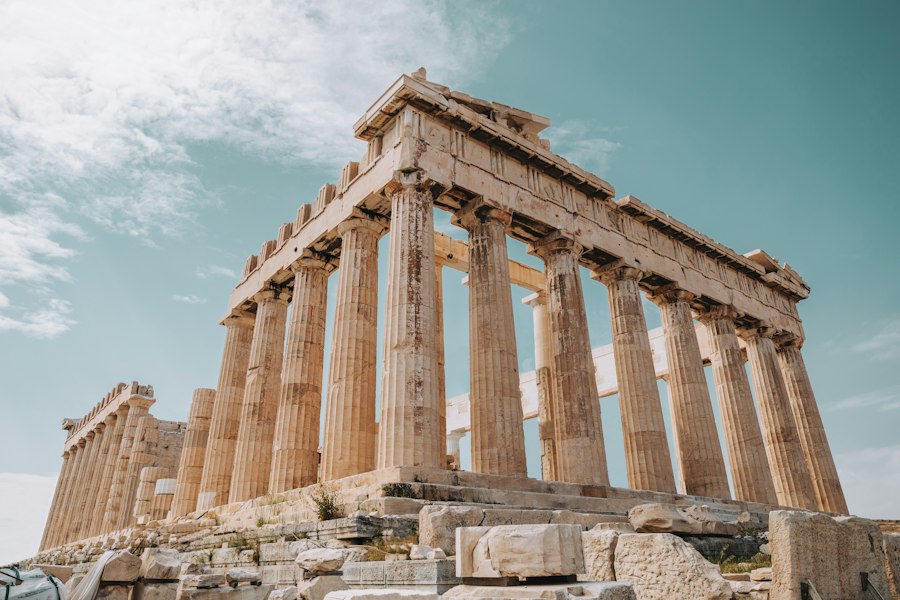
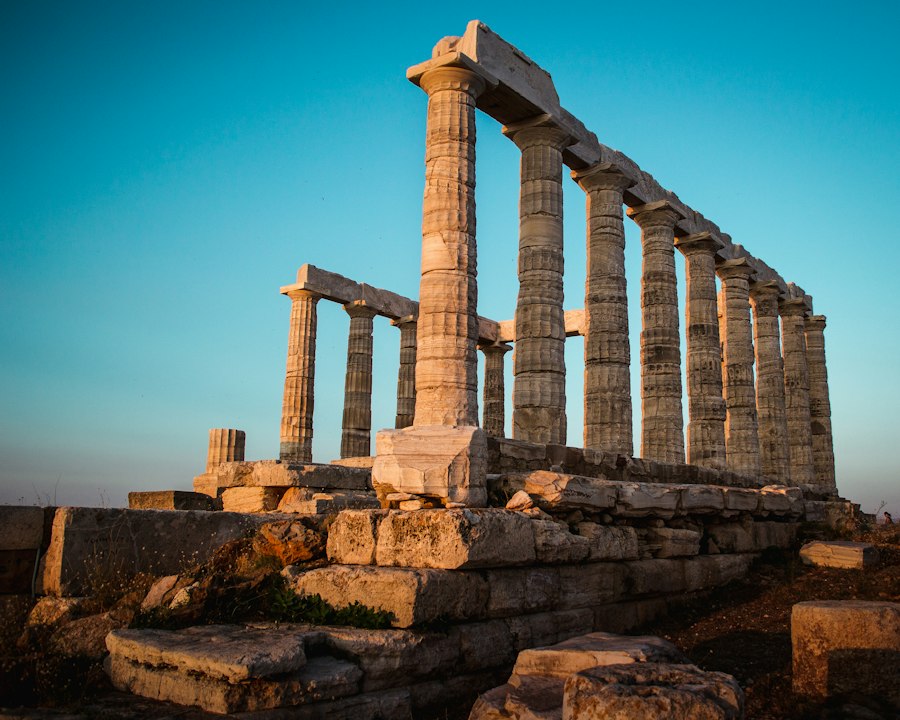
Think about the appearance of many government buildings in Western democracies – courthouses, parliaments, presidential mansions. They often feature columns, pediments, and symmetrical designs strongly reminiscent of ancient Greek temples and public structures. This isn’t just an aesthetic choice; it’s a deliberate symbolic connection to a perceived golden age of reason, order, and democratic ideals. The Parthenon, for instance, a symbol of Athenian democracy’s golden age, has inspired countless architectural designs, suggesting a continuity of values and aspirations.
Public Spaces and Civic Life
The concept of public spaces for civic discourse also traces back to the Greek agora. While our modern agoras are less likely to host direct legislative debates, town squares, public parks, and even online forums serve a similar function as places for gathering, discussion, and the expression of public opinion. The Greek emphasis on creating public spaces where citizens could meet, debate, and participate in civic life underscored the importance of community and collective action, a vital element of democratic societies.
Democratic Accountability and Scrutiny
Finally, a crucial aspect of Athenian democracy that resonates deeply in modern systems is the idea of accountability and scrutiny of public officials. The Greeks developed various mechanisms to hold their leaders responsible for their actions and prevent corruption or the abuse of power.
Ostracism and Public Review
The most famous mechanism was “ostracism.” Once a year, Athenian citizens had the option to vote to banish any individual whom they believed posed a threat to the democracy, usually for ten years. While a controversial practice (and sometimes used for political maneuvering), it served as a powerful tool to remove overly ambitious or potentially tyrannical figures without resorting to violence.
Furthermore, almost every Athenian official was subject to a process called euthynai after their term of office. This was a public review where citizens could bring charges against officials for misconduct or mismanagement during their time in power. Officials had to give an account of their actions and finances. This rigorous system of post-office scrutiny was designed to deter corruption and ensure that those who held public trust were held accountable to the people they served.
Elections, Sortition, and Term Limits
While direct elections for many administrative positions were less common in Athens (sortition, or selection by lot, was preferred to prevent professional politicians and ensure broad participation), the selection of generals and other key military roles was done by election. This recognized the need for specialized skills in certain areas. Crucially, strict term limits were applied to almost all offices, preventing individuals from accumulating too much power over time. These mechanisms, whether through sortition, limited elections, or accountability reviews, all aimed at the same goal: ensuring that power remained with the people and that those who wielded it did so responsibly and transparently. Modern democracies, with their regular elections, oversight committees, impeachment processes, and term limits (for some offices), clearly echo these ancient Greek principles of democratic accountability.
FAQs
What is the significance of ancient Greece in the development of democracy?
Ancient Greece is often regarded as the birthplace of democracy, particularly in the city-state of Athens during the 5th century BCE. The Athenian model introduced the concept of direct democracy, where citizens participated in decision-making processes, influencing the development of democratic principles that are foundational to modern democratic systems.
How did Athenian democracy differ from modern democracy?
Athenian democracy was a direct form of governance where citizens voted on legislation and executive decisions personally, rather than through elected representatives. In contrast, modern democracies typically employ a representative system where elected officials make decisions on behalf of the citizens, reflecting a broader and more inclusive approach to governance.
Who were considered citizens in ancient Athens?
In ancient Athens, citizenship was limited to free-born males who had completed their military training and were at least 18 years old. Women, slaves, and foreigners were excluded from citizenship and, therefore, from participating in the democratic process, highlighting the limitations of Athenian democracy compared to contemporary standards of inclusivity.
What role did the Assembly play in Athenian democracy?
The Assembly, known as the Ekklēsia, was a central institution in Athenian democracy where citizens gathered to discuss and vote on important issues, including laws, war, and foreign policy. It was open to all male citizens, allowing them to express their opinions and influence governance directly, which was a key feature of the democratic process in Athens.
How did ancient Greek philosophers influence democratic thought?
Ancient Greek philosophers, such as Socrates, Plato, and Aristotle, significantly influenced democratic thought through their explorations of ethics, governance, and the role of the individual in society. Their discussions on justice, virtue, and the ideal state contributed to the philosophical foundations of democracy, shaping the way later thinkers approached political theory and governance.
About the Author