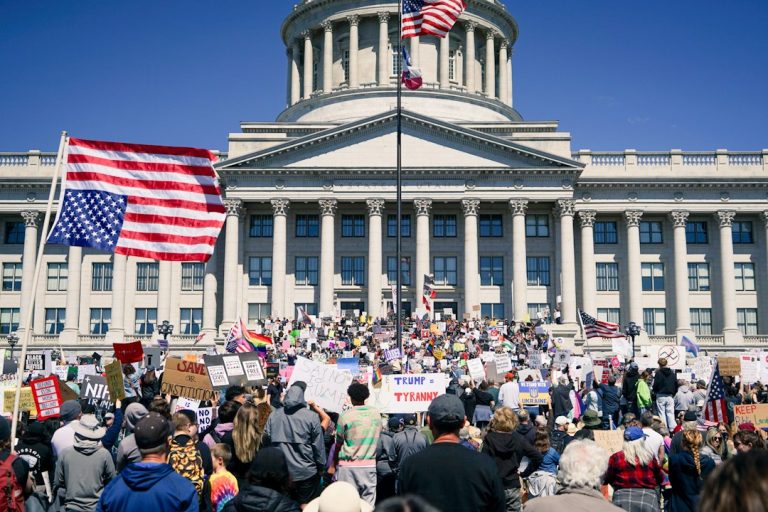
The U.S. Constitution, despite being penned centuries ago, remains remarkably relevant in safeguarding your personal freedoms in 2026. It’s not just an old document gathering dust; it’s a living framework that actively shapes the liberties we often take for granted. From how you speak your mind to how you’re treated by the legal system, its provisions are at play every single day, often without us even realizing it. This article will explore seven key ways this foundational document continues to shield your individual rights and freedoms in modern America.
1. Free Speech and Expression: Your Voice Matters
One of the most immediate and frequently exercised freedoms protected by the U.S. Constitution is the right to free speech and expression. The First Amendment clearly states that “Congress shall make no law…abridging the freedom of speech, or of the press; or the right of the people peaceably to assemble, and to petition the government for a redress of grievances.” This isn’t just about yelling in a public square; it encompasses a vast array of ways you communicate.
Your Right to Speak (and Not Speak)
This freedom allows you to voice your opinions, criticisms, and beliefs without fear of government censorship or punishment. Whether you’re posting on social media, writing an article, participating in a protest, or even wearing a t-shirt with a political slogan, the government generally cannot silence you simply because it dislikes your message. It also protects your right not to speak, meaning you cannot be compelled by the government to express beliefs you don’t hold. For instance, you can’t be forced to salute the flag or recite a pledge if it goes against your conscience. This bedrock principle ensures a marketplace of ideas, crucial for a healthy democracy, allowing for open debate and the challenging of established norms.
The Power of a Free Press
The “freedom of the press” clause is equally vital. It ensures that journalists and media outlets can investigate, report, and publish information, even if it’s critical of the government or powerful figures, without prior restraint or undue interference. This acts as a crucial check on power, holding officials accountable and informing the public. While there are limits (like incitement to violence or defamation), the bar for restricting speech and press is incredibly high, reflecting the deep value placed on these freedoms.
The Constitution of the United States of America serves as a foundational document that safeguards personal freedoms through its Bill of Rights, which guarantees essential liberties such as freedom of speech, religion, and assembly. These protections are crucial in promoting a society where individuals can express themselves without fear of government reprisal. For a deeper understanding of the importance of personal freedoms and their implications in various contexts, you can read a related article titled “You Were Born Free: A Message of Truth and Hope for the People of North Korea” available at this link.
2. Protection from Unreasonable Searches and Seizures
Imagine a world where law enforcement could simply barge into your home, rummage through your belongings, or seize your phone without any justification. The Fourth Amendment of the U.S. Constitution directly counters this frightening scenario. It establishes a fundamental right to privacy in your person, your home, your papers, and your effects.
The Warrant Requirement
The core of this protection lies in the requirement for a warrant. Generally, for police to search your property or seize your belongings, they must obtain a warrant from a judge. To get a warrant, they need “probable cause” – a reasonable belief, supported by facts, that a crime has been committed or that evidence of a crime will be found. This probable cause must be sworn to under oath, and the warrant itself must specifically describe the place to be searched and the items or persons to be seized. This prevents generalized fishing expeditions by authorities, ensuring that invasions of privacy are targeted and justified.
Exceptions and Contemporary Challenges
While the warrant rule is robust, there are recognized exceptions, such as “exigent circumstances” where immediate action is necessary to prevent harm or destruction of evidence, or searches “incident to a lawful arrest.” However, even these exceptions are narrowly construed. In our increasingly digital world, the Fourth Amendment faces new challenges concerning digital privacy – think about data on your smartphone or cloud storage. Courts continue to grapple with how these constitutional protections apply to evolving technologies, striving to maintain the spirit of the amendment in the face of modern surveillance capabilities.
3. Due Process and Fair Legal Procedures
The Fifth and Fourteenth Amendments of the U.S. Constitution are cornerstones of fairness in the legal system, guaranteeing “due process of law.” This isn’t just legal jargon; it’s a promise that the government must respect all legal rights owed to a person and follow established procedures before depriving anyone of life, liberty, or property.
Procedural Due Process
Procedural due process ensures that governmental decisions affecting your rights are made fairly. This means you have a right to notice of the charges or allegations against you, an opportunity to be heard (often through a trial or hearing), and an impartial decision-maker. For example, if you’re accused of a crime, you have a right to know what you’re accused of, to present your side of the story, and to have a jury or judge decide your fate. This prevents arbitrary government action and ensures that individuals aren’t punished or stripped of their rights without a proper process.
Substantive Due Process
Beyond just the procedures, “substantive due process” protects certain fundamental liberties from government interference, even if the procedures used are otherwise fair. These are rights considered so fundamental to ordered liberty that the government cannot infringe upon them without a compelling justification. While not explicitly listed in the Constitution, courts have recognized rights such as the right to marry, the right to procreate, and the right to raise your children as part of substantive due process. This concept essentially ensures that the substance of the law itself, and not just its application, respects basic human dignities and freedoms.
4. Protection Against Self-Incrimination and Double Jeopardy
The Fifth Amendment offers critical protections for individuals interacting with the criminal justice system, ensuring that the power of the state isn’t used to coerce confessions or repeatedly harass individuals over the same alleged offense.
“Pleading the Fifth”
The right against self-incrimination is famously known as “pleading the Fifth.” It means you cannot be forced to testify against yourself in a criminal case. This prevents the government from using torture or psychological pressure to extract confessions and places the burden of proof squarely on the prosecution. When police question you, they must inform you of this right, along with the right to an attorney (your “Miranda rights”). Choosing to remain silent cannot be used as evidence of guilt, and prosecutors cannot comment on your refusal to testify. This is a fundamental safeguard against overzealous state power and ensures that confessions are truly voluntary.
No Double Jeopardy
The double jeopardy clause protects you from being prosecuted twice for the same offense after an acquittal or conviction, or from receiving multiple punishments for the same crime. Once a jury finds you not guilty, or you’ve served your time, the government cannot try to convict you again for the very same acts. This provides finality to legal proceedings and prevents the state from endlessly pursuing an individual, providing peace of mind and protecting against harassment.
The Constitution of the United States of America serves as a vital framework for protecting personal freedoms, ensuring that individual rights are upheld against governmental overreach. A related article that delves deeper into this topic can be found at I Want Liberty, where it discusses the various amendments that safeguard liberties such as freedom of speech, religion, and the right to bear arms. Understanding these protections is essential for appreciating the balance between authority and individual rights in a democratic society.
5. Right to Counsel and a Fair Trial
| Constitutional Provision | Personal Freedom Protected | Description | Relevant Amendment |
|---|---|---|---|
| Freedom of Speech | Expression | Protects the right to express opinions without government censorship or restraint. | First Amendment |
| Freedom of Religion | Religious Practice | Prohibits the government from establishing a religion or restricting religious practices. | First Amendment |
| Right to Bear Arms | Self-defense | Allows individuals to possess firearms for lawful purposes, including self-defense. | Second Amendment |
| Protection from Unreasonable Searches and Seizures | Privacy | Requires law enforcement to have probable cause and a warrant to conduct searches. | Fourth Amendment |
| Right to Due Process | Fair Treatment | Guarantees fair legal procedures before depriving a person of life, liberty, or property. | Fifth and Fourteenth Amendments |
| Right to a Fair Trial | Justice | Ensures the right to a speedy and public trial by an impartial jury. | Sixth Amendment |
| Protection from Cruel and Unusual Punishment | Humane Treatment | Prohibits excessive bail, fines, and cruel or unusual punishment. | Eighth Amendment |
| Right to Privacy | Personal Autonomy | Implied protection against government intrusion into personal and private matters. | Various Amendments (e.g., First, Third, Fourth, Ninth) |
When facing criminal charges, the stakes are incredibly high. The Sixth Amendment of the U.S. Constitution provides a crucial set of protections designed to ensure a fair trial and prevent wrongful convictions.
The Importance of Legal Representation
One of the most impactful provisions is the right to counsel. This means if you’re accused of a crime, you have the right to an attorney to represent you. If you cannot afford one, the government must provide one for you (a public defender). This ensures that even those without financial means have a qualified professional to navigate the complexities of the legal system, challenge evidence, present defenses, and protect their rights. Without legal representation, an ordinary citizen would be at a severe disadvantage against the resources of the state.
Other Fair Trial Elements
Beyond counsel, the Sixth Amendment guarantees several other vital components of a fair trial:
- Speedy and Public Trial: You have the right to a trial without undue delay, preventing indefinite detention without resolution. The “public” aspect ensures transparency and accountability in the justice system.
- Impartial Jury: You have the right to be tried by an impartial jury drawn from the community, ensuring that your fate is decided by your peers rather than a biased entity.
- Confront Your Accusers: You have the right to confront the witnesses against you, meaning you can cross-examine them and challenge their testimony, a critical tool for uncovering inconsistencies or untruths.
- Subpoena Witnesses: You have the right to compel favorable witnesses to testify on your behalf, ensuring you can present a full defense.
These elements collectively create a robust framework designed to ensure that justice is administered fairly and that the accused has a genuine opportunity to defend themselves.
The Constitution of the United States is a foundational document that safeguards personal freedoms through various amendments, particularly the Bill of Rights. These amendments ensure that individuals have the right to free speech, religion, and assembly, among other liberties. For a broader perspective on how different nations approach the concept of freedom, you might find it interesting to read an article discussing the importance of personal liberties in Canada, which can be found here. This article highlights the universal struggle for freedom and the need for vigilance in protecting these rights.
6. Protection from Cruel and Unusual Punishment
The Eighth Amendment addresses the government’s power to punish, setting boundaries on what is permissible, even for those convicted of crimes. It prohibits “cruel and unusual punishments” and excessive bail or fines.
Humane Treatment, Even for Convicts
This amendment means that punishments cannot be barbaric, torturous, or disproportionate to the crime committed. While the definition of “cruel and unusual” has evolved over time with societal standards, it generally prohibits things like torture, excessive solitary confinement, or punishments that are wantonly inflicted. It also applies to the conditions of confinement, meaning prisoners have a right to basic humane treatment, including medical care. This reflects a societal belief that even those who have committed crimes retain fundamental human dignity and should not be subjected to gratuitous suffering.
No Excessive Bail or Fines
The prohibition against excessive bail and fines ensures that individuals are not held indefinitely before trial simply because they cannot afford bail, nor are they subjected to financial penalties that are grossly out of proportion to the offense. Bail is meant to ensure a defendant’s appearance in court, not to be a punitive measure. This prevents the justice system from disproportionately impacting economically disadvantaged individuals.
7. The Ninth and Tenth Amendments: Unenumerated Rights and State Powers
While the Bill of Rights explicitly lists many freedoms, the framers recognized that it couldn’t possibly list every single right. This foresight led to the Ninth and Tenth Amendments, which serve as crucial safeguards for both individual liberties not explicitly named and the division of power between federal and state governments.
The Ninth Amendment: Your Unlisted Freedoms
The Ninth Amendment states, “The enumeration in the Constitution, of certain rights, shall not be construed to deny or disparage others retained by the people.” This is a powerful statement. It means that just because a specific right isn’t written down doesn’t mean you don’t have it. It acts as a safety net, protecting unenumerated rights that are fundamental to personal liberty. For example, the right to privacy, while not explicitly mentioned in the text, has been recognized by courts as being protected through the penumbras (implied rights) of several amendments, and the Ninth Amendment reinforces the idea that such rights exist and are retained by the people. It prevents the government from arguing that anything not explicitly forbidden is therefore permitted.
The Tenth Amendment: States and the People Retain Power
The Tenth Amendment addresses the balance of power, declaring, “The powers not delegated to the United States by the Constitution, nor prohibited by it to the States, are reserved to the States respectively, or to the people.” This is fundamental to federalism. It means the federal government only has the powers specifically granted to it by the Constitution. All other powers belong either to the individual states or directly to the people. This acts as a critical check on federal overreach, ensuring that many decisions affecting your daily life are made closer to home, at the state or local level, fostering a more responsive government and allowing for different approaches to governance across the nation. Together, these two amendments affirm that personal freedoms extend beyond the explicitly written, and that governmental power is limited, with much remaining in the hands of the states and the citizenry.
FAQs
What are the main amendments in the Constitution that protect personal freedoms?
The main amendments that protect personal freedoms in the United States Constitution are the First Amendment, which guarantees freedoms concerning religion, expression, assembly, and the right to petition; the Fourth Amendment, which protects against unreasonable searches and seizures; the Fifth Amendment, which ensures the right to due process and protects against self-incrimination; the Sixth Amendment, which guarantees the right to a fair trial; and the Eighth Amendment, which prohibits cruel and unusual punishment.
How does the First Amendment protect freedom of speech?
The First Amendment protects freedom of speech by prohibiting Congress from making laws that abridge the freedom of speech. This means individuals have the right to express their opinions and ideas without government interference, although there are some exceptions, such as speech that incites violence or constitutes hate speech.
What role does the Fourth Amendment play in protecting personal privacy?
The Fourth Amendment plays a crucial role in protecting personal privacy by requiring law enforcement to obtain a warrant based on probable cause before conducting searches and seizures. This amendment helps ensure that individuals have a reasonable expectation of privacy in their homes and personal belongings.
How does the Constitution ensure the right to a fair trial?
The Constitution ensures the right to a fair trial primarily through the Sixth Amendment, which guarantees the accused the right to a speedy and public trial by an impartial jury, the right to be informed of the charges, the right to confront witnesses, and the right to have legal counsel. These protections are designed to uphold justice and prevent wrongful convictions.
What is the significance of the Eighth Amendment in terms of personal freedoms?
The Eighth Amendment is significant in terms of personal freedoms as it prohibits excessive bail, excessive fines, and cruel and unusual punishments. This amendment ensures that individuals are treated humanely within the justice system and protects against inhumane treatment or disproportionate penalties for crimes.
About the Author